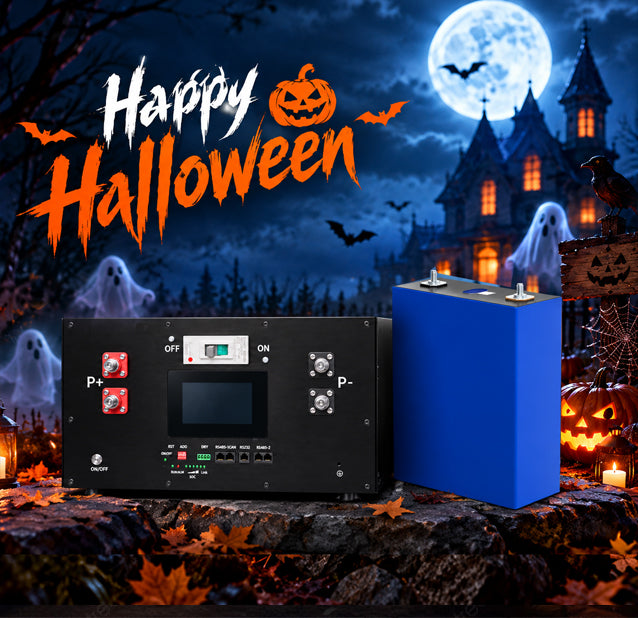
Difference Between EVE MB30 and MB31 Batteries

Choosing between two EVE prismatic LFP cells can be difficult when their physical dimensions, voltage, and charging and discharging specifications are very similar. The EVE MB31 and EVE MB30 are a good example: both are 3.2V prismatic LFP cells with the same listed dimensions and the same initial internal resistance specification, but their nominal capacity, nominal energy, and documented cycle-life test results are different.
This guide compares the two cells using the EVE product specification documents provided for this article. The main focus is the EVE MB31, including its 3.2V 314Ah rating, 1004.8Wh nominal energy, and suitability as a 314Ah prismatic cell for energy-storage battery designs.
EVE MB31 vs MB30: Quick Overview
The most important difference is capacity. According to the supplied EVE specifications, the MB30 has a nominal capacity of 306Ah and nominal energy of 979.2Wh, while the EVE MB31 is rated at 314Ah and 1004.8Wh. Both have a nominal voltage of 3.2V.
| Specification | EVE MB30 | EVE MB31 |
|---|---|---|
| Cell type | Prismatic LFP cell | Prismatic LFP cell |
| Nominal voltage | 3.2V | 3.2V |
| Nominal capacity | 306Ah | 314Ah |
| Nominal energy | 979.2Wh | 1004.8Wh |
| Initial internal resistance | 0.18mΩ ± 0.05mΩ | 0.18mΩ ± 0.05mΩ |
| Standard/max continuous charge power | 0.5P | 0.5P |
| Standard/max continuous discharge power | 0.5P | 0.5P |
| Dimensions | 207.2 × 173.7 × 71.7mm | 207.2 × 173.7 × 71.7mm |
| Weight | 5600g ± 300g | 5600g ± 300g |
| Cycle-life test result | 10,000 cycles at 70% SOH | 8,000 cycles at 70% SOH |
In other words, the EVE MB31 provides 8Ah more nominal capacity and 25.6Wh more nominal energy per cell, while the supplied specification documents list a different cycle-life test result for the two models. The difference in nominal capacity is approximately 2.61%.
EVE MB31: 3.2V 314Ah Prismatic Cell Explained
The EVE MB31 is identified in the supplied EVE specification as a prismatic LFP cell. Its nominal voltage is 3.2V, nominal capacity is 314Ah, and nominal energy is 1004.8Wh. That makes it a 3.2V 314Ah prismatic cell with roughly 1kWh of nominal energy per cell.
What does 3.2V 314Ah mean?
For a single cell, the nominal energy can be calculated as voltage × capacity:
3.2V × 314Ah = 1004.8Wh
When multiple cells are connected in series, the voltage increases while the Ah rating of the series string remains 314Ah. For example, a 16-cell series configuration has a nominal voltage of 51.2V and nominal energy of approximately 16.08kWh before considering system-level limits and usable-energy settings.
Why the EVE MB31 is relevant to DIY energy storage
A prismatic format can be integrated into a battery pack using series and parallel configurations. For DIY battery builders, the important engineering work is not only choosing the cell capacity but also verifying cell matching, busbars, compression, BMS compatibility, fusing, insulation, enclosure design, temperature monitoring, and inverter requirements.

EVE MB30: 3.2V 306Ah Prismatic Cell Explained
The EVE MB30 specification identifies the product as a prismatic LFP cell with a nominal voltage of 3.2V, nominal capacity of 306Ah, and nominal energy of 979.2Wh. Its physical dimensions and listed weight are the same as the MB31 specification supplied for this comparison.
MB30 energy calculation
The nominal energy follows the same relationship:
3.2V × 306Ah = 979.2Wh
This makes the MB30 a useful reference point for understanding the capacity difference between the two models. The key distinction is not nominal voltage or physical size, but the specified capacity and the corresponding nominal energy.
For more background on building a battery system, see our DIY LiFePO4 Battery Guide.
EVE MB31 vs MB30: Specification Comparison
The two specification documents show a high degree of similarity in their basic electrical and mechanical parameters. The following table focuses on values explicitly listed in the supplied EVE documents.

Voltage and charge/discharge parameters
Both cells are specified at 3.2V nominal voltage. Both documents list 0.5P as the standard charging power, maximum continuous charging power, standard discharging power, and maximum continuous discharging power at 25°C ± 2°C.
Voltage limits
Both specifications list 3.65V as the standard charging voltage and 2.5V as the discharge cut-off voltage when the cell temperature is above 0°C. The documents also specify a 2.0V discharge cut-off for temperatures at or below 0°C. These are cell-level specification values and should not be treated as a substitute for the charging and protection settings required by a complete battery system.
Initial internal resistance
Both documents list an initial internal resistance of 0.18mΩ ± 0.05mΩ, measured by the stated AC 1kHz method at delivery SOC for a fresh cell. Actual resistance measurements in a received batch can vary, so builders should use the agreed measurement method when matching cells.
EVE MB31: Capacity and Energy Difference
The most direct specification difference is the 8Ah capacity increase from MB30 to MB31.
- EVE MB30: 306Ah / 979.2Wh
- EVE MB31: 314Ah / 1004.8Wh
- Difference: 8Ah / 25.6Wh per cell
- Relative increase: approximately 2.61%
Because both models have the same nominal voltage, the energy difference is directly proportional to the capacity difference. In a series battery, this difference scales with the number of series cells. For a 16S configuration, the nominal energy difference is approximately 409.6Wh between a 16S MB30 string and a 16S MB31 string, assuming the nominal ratings are used for the calculation.
EVE MB31: Cycle Life and Performance Conditions
Cycle-life numbers should always be read together with the test conditions. The supplied EVE MB31 specification lists 8,000 cycles at 25°C and 70% SOH. The supplied MB30 specification lists 10,000 cycles at 25°C and 70% SOH.
This is an important difference in the documents, but it should not be interpreted as a guarantee of how a complete battery pack will perform. Real-world pack life depends on factors such as charge/discharge rate, temperature, depth of discharge, cell matching, mechanical assembly, BMS settings, and system operating conditions.
Why 70% SOH matters
SOH means state of health. A cycle-life specification expressed at 70% SOH means the stated cycle count is associated with a defined remaining-capacity threshold under the specified test procedure. It does not mean that the cell stops working immediately at that point.
For a battery project, compare cycle-life figures only when the test conditions, end-of-life threshold, charge/discharge profile, and temperature are comparable.
EVE MB31: Dimensions, Weight and Installation
One practical feature of the comparison is that the supplied MB30 and MB31 specifications list the same dimensions:
- Height with terminal: 207.2 ± 0.5mm
- Height without terminal: 204.6 ± 0.5mm
- Length: 173.7 ± 0.5mm
- Thickness: 71.7 ± 0.8mm
- Center distance between poles: 123.0 ± 0.3mm
- Weight: 5600 ± 300g
For a battery enclosure designed around these dimensions, always verify the actual cell drawing, terminal configuration, insulation, compression requirements, busbar clearance, and BMS wiring before treating two cell models as mechanically interchangeable.
EVE MB31: 3.2V 314Ah LiFePO4 Cell Applications
The EVE MB31 3.2V 314Ah LiFePO4 cell can be used as a building block in series and parallel battery configurations. Typical engineering discussions around a cell of this format include residential energy storage, solar battery banks, backup power, commercial energy storage, and other stationary storage systems. The actual suitability of a cell for a specific system depends on the complete system design and applicable requirements.
Residential and DIY energy storage
For DIY LiFePO4 battery projects, a 16S configuration of 314Ah cells provides a nominal 51.2V system voltage and approximately 16.08kWh nominal energy. The pack still requires appropriate BMS protection, fusing, contactors or disconnects where required, insulation, enclosure design, thermal management, and a charger/inverter configured for the cell chemistry.
Solar energy storage
A 3.2V 314Ah LiFePO4 cell can be assembled into higher-voltage battery banks for solar energy storage. The system designer should size the battery based on daily energy demand, solar production, inverter power, desired autonomy, maximum current, temperature, and usable state-of-charge window rather than using nominal capacity alone.
Commercial and industrial energy storage
Multiple cells can be combined into modules and larger battery systems. EVE describes its prismatic LFP cell portfolio as being used in energy-storage-related applications, including telecom and grid energy storage. For commercial systems, cell-level specifications are only one part of the design; module, pack, thermal, electrical, fire-safety, and regulatory requirements also need to be verified.
EVE MB31 or MB30: What Should You Check?
Instead of comparing the two models by capacity alone, evaluate the requirements of the complete battery design.
- Required nominal energy: Calculate the required kWh and then determine the necessary series/parallel configuration.
- Available enclosure space: The supplied specifications list the same basic dimensions, but terminal and assembly details still need verification.
- Cycle-life requirement: Compare the documented test conditions with your expected operating profile.
- Current and power: Check the 0.5P specification against the intended charge and discharge power.
- BMS compatibility: Confirm cell count, voltage limits, temperature sensing, current capability, balancing strategy, and protection logic.
- Cell matching: For a series pack, use cells with appropriate consistency in capacity, resistance, and state of charge.
- Mechanical assembly: Verify compression, busbar clearance, insulation, terminal hardware, and enclosure design.
For a beginner-friendly introduction to battery-management systems, see What Is a BMS?.
EVE MB31 and MB30 FAQs
Is EVE MB31 a 314Ah cell?
Yes. The supplied EVE MB31 specification lists a nominal capacity of 314Ah and nominal voltage of 3.2V, corresponding to 1004.8Wh nominal energy.
Is EVE MB31 the same size as MB30?
The supplied specifications list the same height, length, thickness, pole center distance, and nominal weight tolerance for the two models. Always verify the latest cell drawing and the actual terminal configuration before assembly.
Which has the higher nominal capacity, MB30 or MB31?
The EVE MB31 is specified at 314Ah, while the EVE MB30 is specified at 306Ah. The difference is 8Ah per cell.
Which has the higher nominal energy?
The MB31 is specified at 1004.8Wh and the MB30 at 979.2Wh. Both are based on a nominal voltage of 3.2V.
What is the documented cycle life of EVE MB31?
The supplied MB31 specification lists 8,000 cycles at 25°C and 70% SOH. The MB30 specification lists 10,000 cycles under its stated 25°C, 70% SOH cycle-life test condition.
Can EVE MB31 be used for a 51.2V battery?
Sixteen 3.2V nominal cells connected in series produce a 51.2V nominal battery. A real battery system must also use suitable BMS, protection, charging, wiring, enclosure, and inverter settings.
EVE MB31 vs MB30: Conclusion
The supplied EVE specifications show that MB30 and MB31 share many core characteristics: both are prismatic LFP cells with a 3.2V nominal voltage, 0.5P standard and maximum continuous charge/discharge power at 25°C ± 2°C, the same listed initial internal resistance, and the same basic dimensions.
The primary numerical difference is capacity: EVE MB31 provides 314Ah and 1004.8Wh, compared with 306Ah and 979.2Wh for MB30. The documents also show different cycle-life test results: 8,000 cycles for MB31 and 10,000 cycles for MB30 at 25°C and 70% SOH. These figures should be interpreted within their specified test conditions rather than as a prediction of complete-pack service life.
For anyone evaluating a 314Ah prismatic cell or 3.2V 314Ah LiFePO4 cell, the EVE MB31 specification provides the key electrical, mechanical, operating-temperature, and safety information needed as a starting point for system-level design.
Source: EVE Power product specification documents supplied with this article. For general information about EVE's prismatic LFP cell portfolio, visit EVE's official Prismatic LFP Cell page.